Teaching Beginner Adults Freestyle: My 10-Step Approach
I learned to swim as an adult. I never had formal lessons, never had someone patiently guiding me from the shallow end. Instead, I taught myself—watching people glide effortlessly at the pool, practicing the movements on land until they became muscle memory, and then testing them in the water. I watched countless videos breaking down the mechanics of freestyle, trying to understand not just how to move, but why we pull, kick, and breathe the way we do. Once I understood the logic behind each movement, practicing it became far easier, far more natural.
That experience shaped the way I teach adults today. I don’t just tell my students what to do; I explain the reasoning behind every stroke, every breath, every glide. From my experience, understanding the “why” keeps swimmers motivated, helping them persist when learning feels awkward or exhausting.
Here’s how I guide my beginner adult students through freestyle in 10 steps:
Step 1: Comfort in the Water
Before any stroke or kick, we focus on feeling at ease. Students walk into the shallow end, moving around and feeling the water against their bodies. Comfort and confidence here are crucial; the water should feel like a safe, supportive environment.
Step 2: Blowing Bubbles
Next comes breathing. I explain why exhaling underwater is important and have students practice blowing bubbles. This small step builds confidence, rhythm, and lung control.
Step 3: Extended Breathing
Once basic bubbling is comfortable, I ask students to extend their exhale for 5–7 seconds, training them to control their breath rather than holding it. This develops endurance and prepares them for coordinated breathing during strokes.
Step 4: Floating
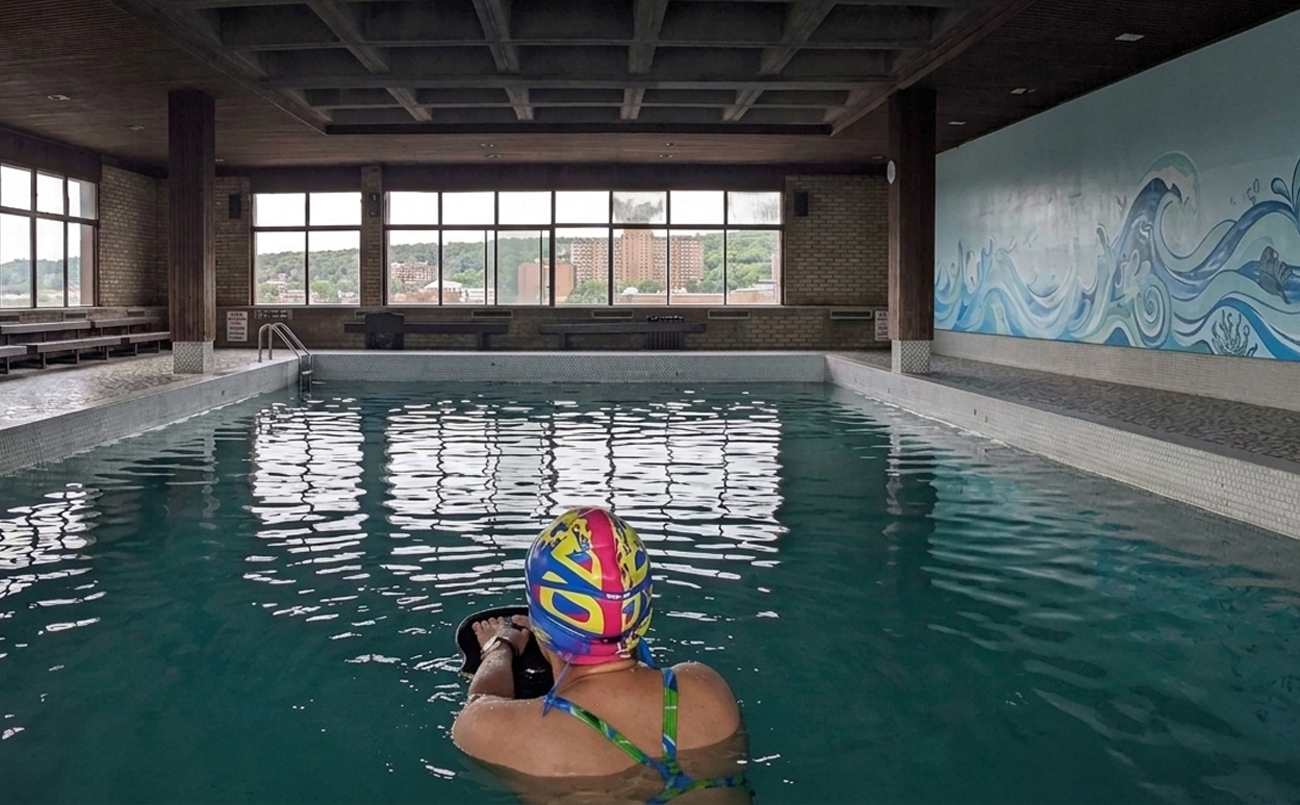
Balancing the body in water is the next milestone. We practice floating on both the front and back, learning how to stay buoyant. The hardest part is standing back up after a float, so I provide different tools—holding the wall, using a kickboard, or assisting them physically—to make the process feel safe.
Step 5: Gliding
With balance established, we move into gliding. Students push off and allow their bodies to float forward with minimal effort. I like to make this a game: count the number of kicks it takes to reach the pool’s end, then aim for fewer on the way back. Gliding teaches efficiency, showing that swimming is as much about letting the water carry you as it is about moving your limbs.
Step 6: The Kick
We begin kicking on the side of the pool, then progress to holding the wall and eventually using a kickboard. I emphasize straight, controlled kicks at the surface, because sloppy kicks throw off balance and tire swimmers quickly.
Step 7: Front-to-Side Kicking
Once the kick is comfortable, we introduce side rotation. Students practice kicking while turning from front to side for breathing. This is when coordination and rhythm start coming together.
Step 8: Arm Movement
Now we add the arms. We start by practicing against the wall, focusing on correct mechanics and timing. I explain different breathing patterns—every 2, 3, or 4 pulls—so students understand how to rotate and breathe efficiently. Most people have a preferred side, and I encourage them to find what works best while still building awareness of the other side.
Step 9: Arm Movement with Kickboard — “TAG Drill”
Using the kickboard, we practice what I call the “TAG Drill.” One arm always stays extended on the board while the other completes the stroke, switching after each pull. Like playing tag with their hands, this drill enforces balance, keeps one arm stabilizing the body at all times, and teaches proper rhythm.
Step 10: Putting It All Together
Finally, we combine kicks, glides, arm strokes, and breathing without the board. Each element works in harmony, and the stroke begins to feel natural and fluid. By this stage, students aren’t just swimming freestyle—they’re moving confidently, efficiently, and with joy.
Teaching adults freestyle is about more than technique; it’s about creating understanding, building confidence, and giving swimmers the tools to practice independently. By explaining why each movement matters, I’ve seen my students progress faster, stay motivated, and—most importantly—fall in love with the water the way I did.
Leave a Reply